
Air pollution is often invisible, but for many people in Worcester, exposure to poor air quality happens every day on the journey to work or study. We’re working with Worcestershire Regulatory Services to inform air qulaity policy in Worcestershire.
Over the last two years, staff and students at the University of Worcester have helped build a unique picture of how people move around the city and where they encounter poor air quality. Combined with local monitoring data, the findings are helping Worcestershire Regulatory Services better understand who is exposed to pollution, where it occurs, and how behaviour change can help improve air quality.
Survey respondents were asked whether their daily journeys take them through roads where air quality readings often exceed recommended levels, including Foregate Street, The Butts, Bridge Street, Lowesmoor, Bromyard Road, London Road and Upper Tything.
The results show that these roads are not only busy traffic routes but important commuting corridors for hundreds of staff and students travelling by car, bus, bicycle and on foot.
Travelling Through Worcester’s Air Quality Hotspots
In 2024-25, students reported particularly high use of Upper Tything (51% by car), Bromyard Road (49% by car), London Road (43% by car), while 40% walked through both Foregate Street and All Saints Road.
Staff surveys revealed similar patterns. In 2023-24, 73% of respondents travelled along Bromyard Road by car, 70% along All Saints Road, and 68% along London Road. A second year of data showed many of the same routes continuing to be heavily used.
More Than Just Numbers
The surveys also reveal the real experiences behind the data.
One cyclist described Worcester’s traffic corridors as places where:
“The air pollution is very poor. It feels like you can taste the pollution.”
Many respondents wanted to travel more sustainably but cited unreliable public transport, long journey times and concerns about cycling safety as major barriers. Both staff and students consistently identified better public transport, lower fares and safer cycling routes as the changes most likely to influence their travel choices.
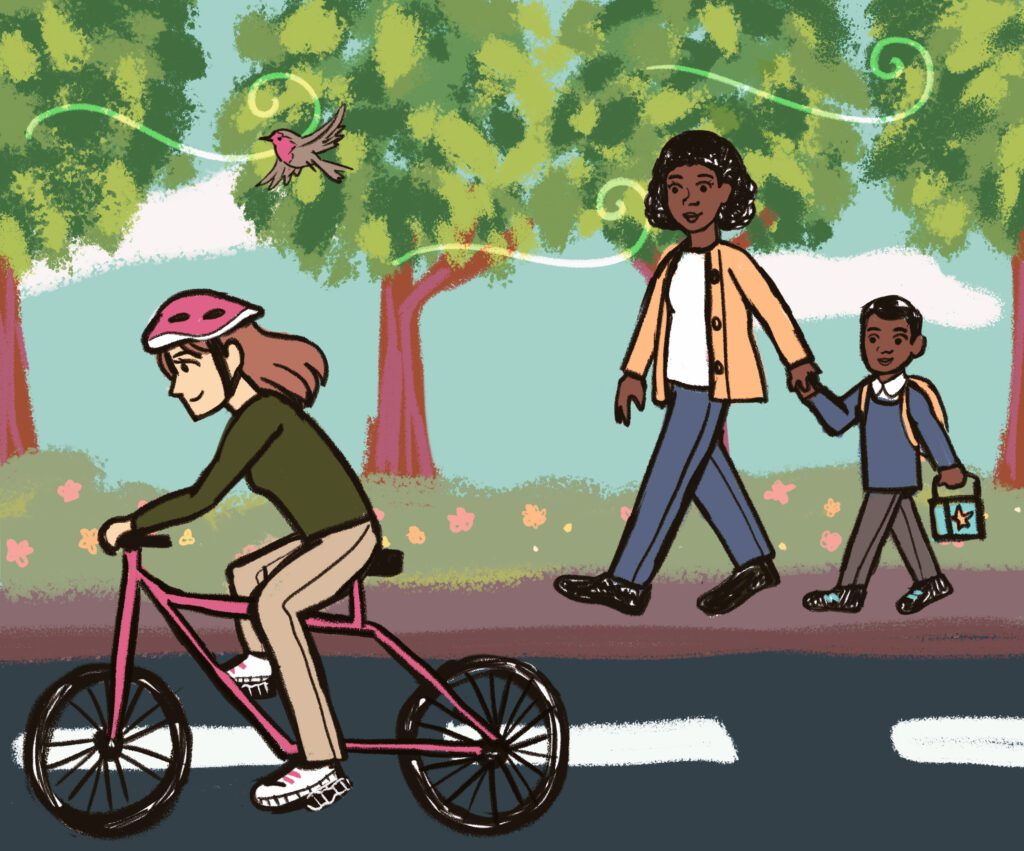
Supporting Air Quality Policy in Worcestershire
While air quality monitoring identifies where pollution levels are highest, it cannot show how people interact with those locations. The University’s surveys provide that missing information, helping identify:
- Which routes are most heavily used.
- How people travel through them.
- Who is most exposed.
- What prevents people from choosing lower-emission travel options.
This evidence is helping to inform local behaviour-change initiatives, including the Air Quality Banner Project, led by Worcestershire Regulatory Services. The project uses creative community engagement and targeted messaging to encourage residents to consider how everyday travel choices can reduce emissions and exposure to pollution. More information about the project can be found on the Air Quality Banner Project webpage.
Cleaner Air Starts With Everyday Choices
The findings highlight simple actions that can make a difference:
- Walking or cycling for shorter journeys where practical.
- Choosing lower-traffic routes.
- Using public transport when feasible.
- Sharing car journeys.
- Avoiding unnecessary vehicle trips.
Poor air quality is not just an environmental issue. It affects health, wellbeing and quality of life across Worcester.
By combining air quality monitoring with real-world travel behaviour, the University of Worcester is helping provide a stronger evidence base for local action to the local authority. Together, the research and the Air Quality Banner Project demonstrate how small changes in everyday travel can contribute to cleaner, healthier air for everyone.